Riding an Electric Bike During Korea's Rainy Season
Learn how to safely ride and maintain an electric bike during Korea's rainy season and wet weather conditions.
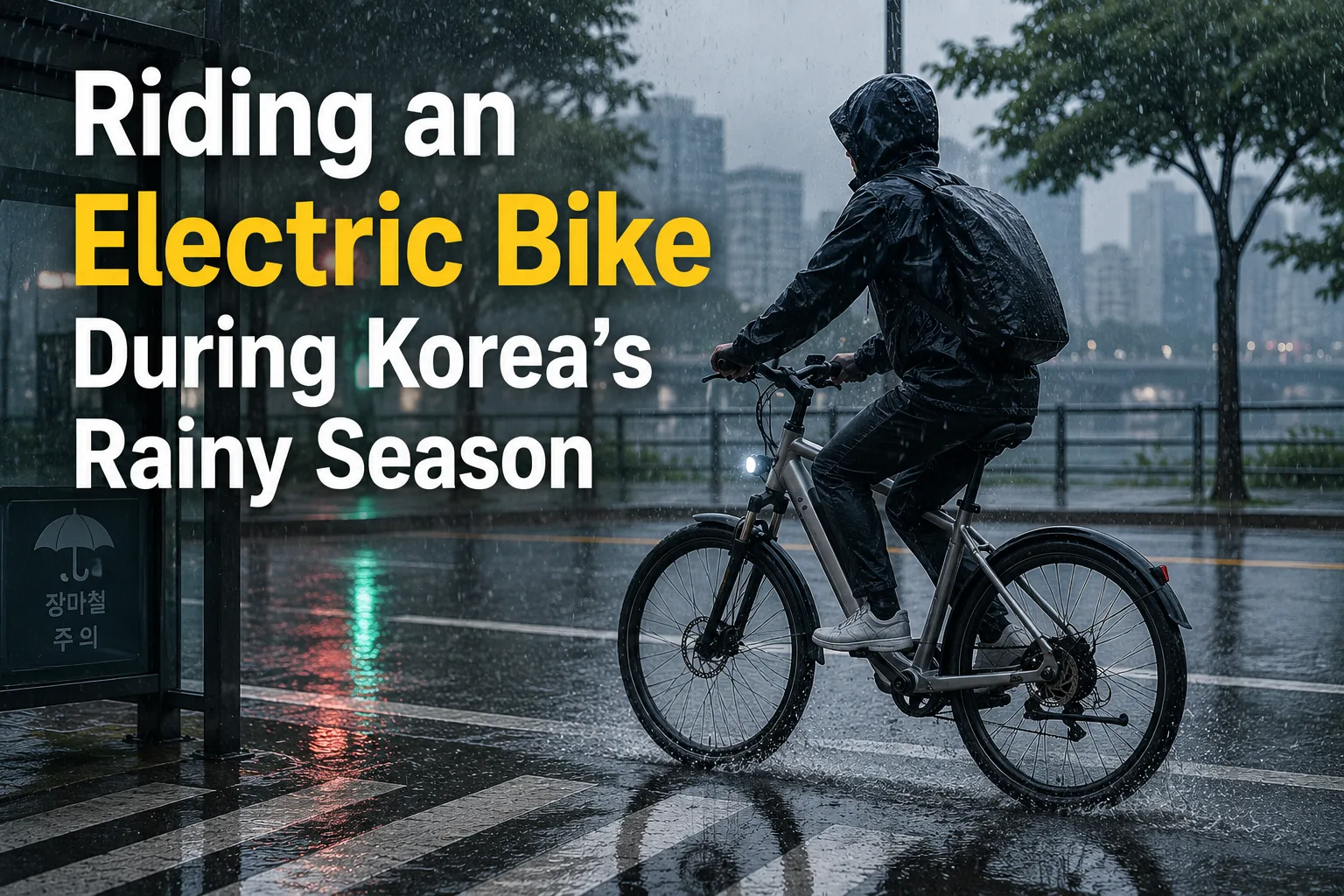
How to ride and maintain your bike safely in wet weather
Korea's rainy season can bring sudden storms, heavy humidity, and long periods of wet roads.
Because many people use electric bikes for commuting and daily transportation, understanding basic rain protection and maintenance becomes important during this time of year.
Are electric bikes waterproof?
Most electric bikes are designed with basic water resistance for light rain and wet roads.
However, water resistance does not mean complete waterproof protection.
Heavy rain, deep puddles, and strong water pressure can still damage electrical components if the bike is not managed properly.
Why rain can become a problem
Electric bikes contain sensitive parts such as batteries, motors, wiring, and display systems.
If water enters these areas, it can cause corrosion, electrical failure, or long-term performance issues.
This is why proper care during the rainy season is important even for bikes with water resistance ratings.
What to avoid during rainy weather
Small habits can significantly reduce the risk of damage over time.
- Avoid riding through deep puddles
- Avoid leaving bikes exposed during heavy rain
- Do not use high-pressure water cleaners
- Avoid turning the bike on after water exposure without inspection
- Do not store wet batteries indoors immediately after riding
Why battery care matters most
The battery is one of the most sensitive parts of an electric bike during wet weather.
After riding in the rain, it is recommended to remove the battery, dry the connection points carefully, and allow everything to air dry before charging or using the bike again.
Moisture left around battery terminals can eventually lead to corrosion or electrical problems.
How to store an electric bike during the rainy season
Keeping the bike dry while parked is one of the easiest ways to prevent problems.
Many riders use waterproof covers when parking outdoors during the rainy season.
Storing the bike indoors or in covered areas also helps reduce long-term exposure to moisture and humidity.
Why regular inspections are important
Wet roads can affect braking performance and tire grip.
During the rainy season, riders should check brake responsiveness, tire condition, battery connections, chain condition, and water around electrical components.
Simple inspections after riding can help prevent larger problems later.
- Brake responsiveness
- Tire condition and air pressure
- Battery connection areas
- Chain condition and rust buildup
- Water around electrical components
Riding safely in rainy conditions
Rainy roads are often more slippery and unpredictable than normal conditions.
Reducing speed, avoiding sudden braking, and staying away from flooded roads can make riding significantly safer.
For many riders, rainy season riding becomes less about speed and more about consistency and safe transportation.
Related guides
FAQ
Can electric bikes be used in the rain?
Yes, most electric bikes can handle light rain and wet roads, but heavy rain and flooding should be avoided whenever possible.
Is it safe to leave an electric bike outside during the rainy season?
It is safer to use a waterproof cover or store the bike in a covered area to reduce long-term moisture exposure.
What should I do after riding in the rain?
Dry the bike carefully, inspect the battery area, and allow electrical components to fully dry before charging or riding again.