How an Exchange Student in Korea Solved Getting Around (A Real Story)
A realistic look at how one student made daily life in Seoul easier with the right transportation setup.
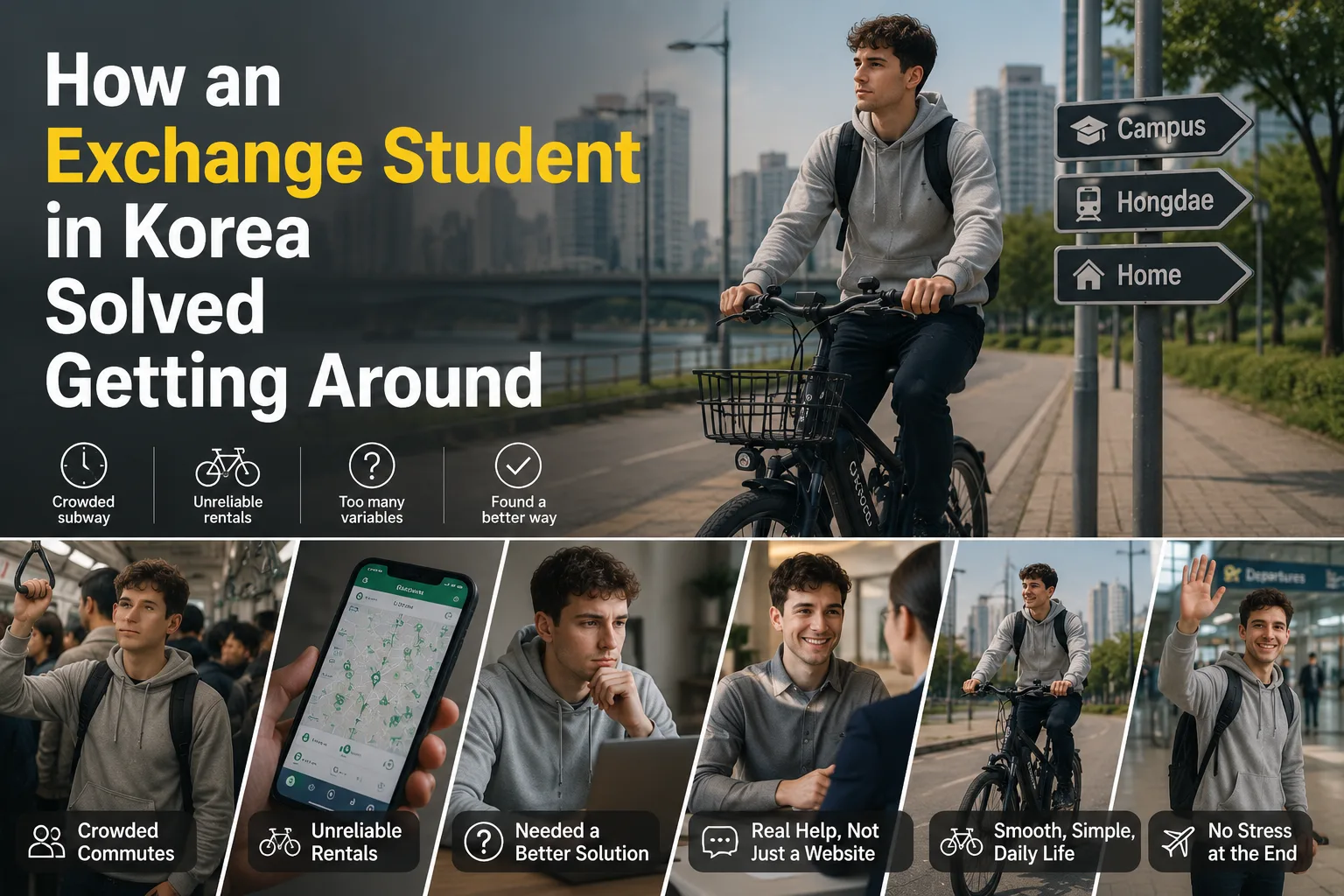
Arriving in Korea without a plan
When Alex arrived in Seoul for a six-month exchange program, transportation wasn't something he had thought much about.
He stayed near Hongdae and assumed the subway would be enough to get around.
On paper, his commute to campus looked simple. One transfer, about 25 minutes.
The daily reality
Within a couple of weeks, the routine started to feel different.
Morning commutes between 9:00 and 9:30 were crowded, and a short trip often turned into 40 minutes once waiting and transfers were included.
"I wasn't late, but I was always rushing," he said.
He found himself planning his day around the subway instead of the other way around.
Trying short-term options
At first, he tried using shared bike rentals for short trips.
Some days it worked perfectly. Other days, there were no bikes nearby, or the battery was too low to rely on.
"It was useful, but I couldn't depend on it every day," he said.
Looking for something more consistent
After a few weeks, it became clear that the problem wasn't just finding a bike.
What he really needed was a reliable way to move around daily without checking apps or adjusting plans constantly.
That's when he started looking for a more consistent solution.
Choosing between cool and practical
At one point, Alex seriously considered getting one of the larger, more eye-catching electric bikes he had seen around the city.
They looked great and stood out, but once he checked the price, it didn't really fit his budget as a student.
"It looked amazing, but I knew I'd feel it every month," he said.
He ended up choosing something more practical instead. It wasn't the most impressive option visually, but it was comfortable, reliable, and made more sense for everyday use.
"At first I thought I'd regret not going for the cooler one, but after a week, I stopped caring," he said.
Getting real help, not just a website
Instead of trying to figure everything out alone, he was able to talk to someone in English.
They asked about his commute, how often he would ride, and what he actually needed day to day.
The process felt simple and clear, and he didn't feel like he was guessing anymore.
"It felt like someone actually understood what I needed," he said.
The moment it changed
A few days later, the bike was delivered.
The first ride home was about 18 minutes, door to door.
No waiting. No transfers. No checking routes.
"That's when I realized how much time I had been losing every day," he said.
What daily life looked like after
From that point on, getting around Seoul became simple.
He used the bike for commuting, quick errands, and exploring different neighborhoods.
On rainy days, he still used the subway, but most days, the bike was the easiest option.
The biggest change was not having to think about transportation anymore.
No stress at the end
When his semester ended, there was nothing to figure out.
He didn't need to sell a bike, meet buyers, or deal with last-minute stress.
He simply returned it and focused on preparing to leave Korea.
Why he recommends it
Looking back, it wasn't just about having a bike.
It was about removing a daily problem that he didn't realize was affecting his experience.
"It just made everything easier," he said.
That's why he ended up recommending it to other students coming to Korea.
Not because it was perfect, but because it actually worked.
Related guides
FAQ
Is a bike a good option for exchange students in Korea?
For many students, having a reliable bike makes commuting and daily life more flexible and less stressful.
What happens when you leave Korea?
Some options allow you to return the bike at the end of your stay, so you don't need to sell it or manage it yourself.